Toyon (Heteromeles arbutifolia)
🌿 Toyon (Heteromeles arbutifolia): California’s Iconic Winter Berry Shrub
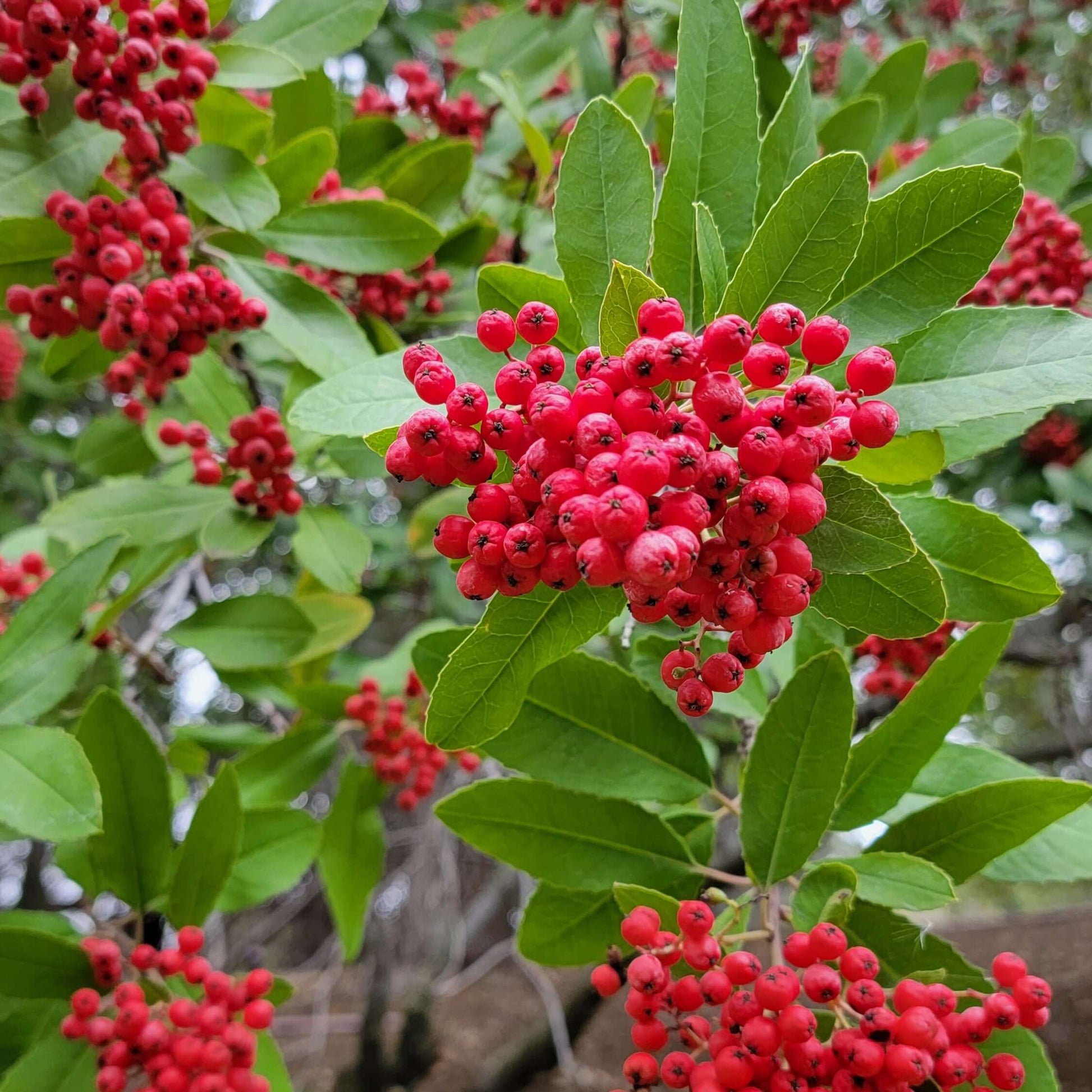
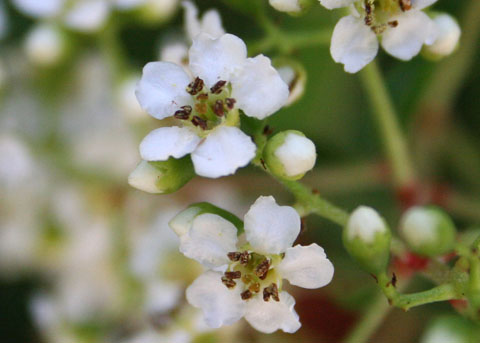
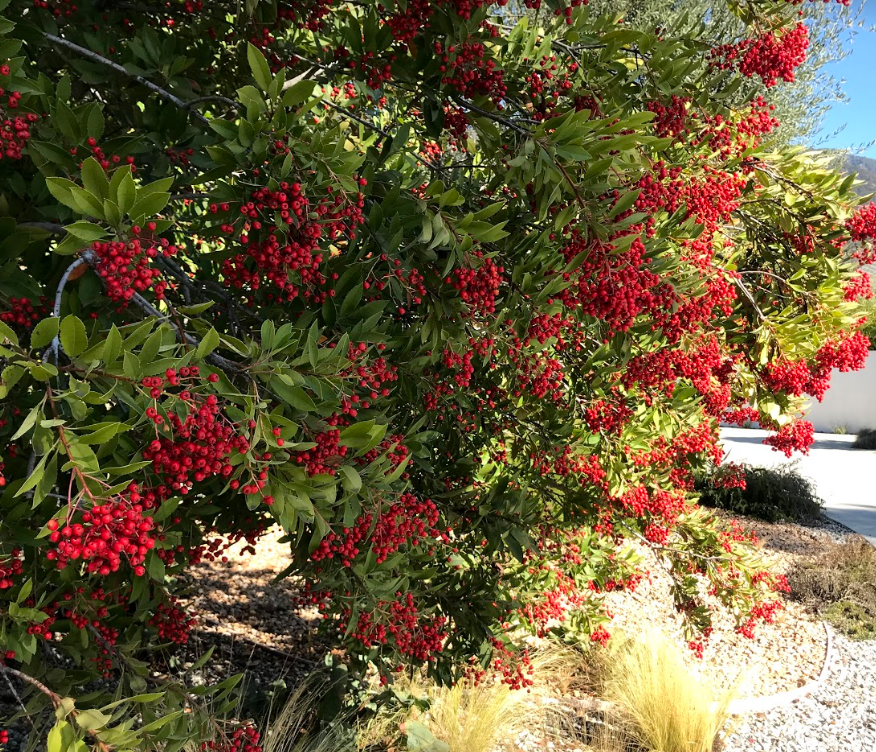
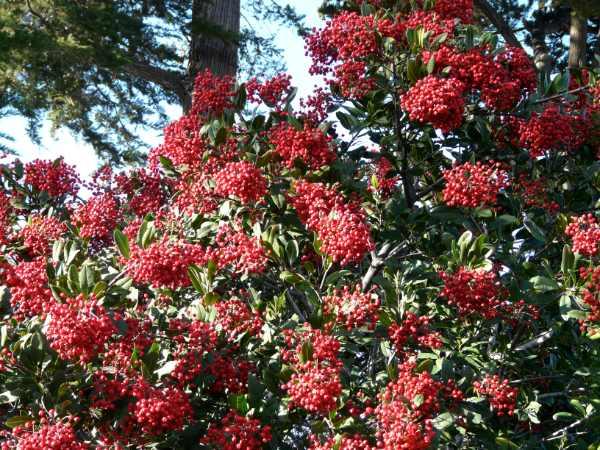
If you’ve ever noticed bright red berries lighting up California hillsides in winter, you’ve already met Toyon—one of the most beloved and recognizable native shrubs in the state.
Also known as California holly (and famously linked to the name “Hollywood”), Heteromeles arbutifolia is a plant that delivers year-round structure, seasonal interest, and incredible resilience.
🌼 Quick Facts
Botanical name: Heteromeles arbutifolia
Common name: Toyon, California holly
Plant type: Evergreen shrub / small tree
Native to: California & Baja California
USDA zones: 8–10
Height: 8–15 ft (can reach 20 ft)
Width: 6–10 ft
Light: Full sun → part shade
Water: Very low once established
Bloom time: Early summer (flowers), winter (berries)
Wildlife: Birds, pollinators
🌿 Why Toyon is a Must-Have in California Gardens
1. Winter Berries That Steal the Show 🔴

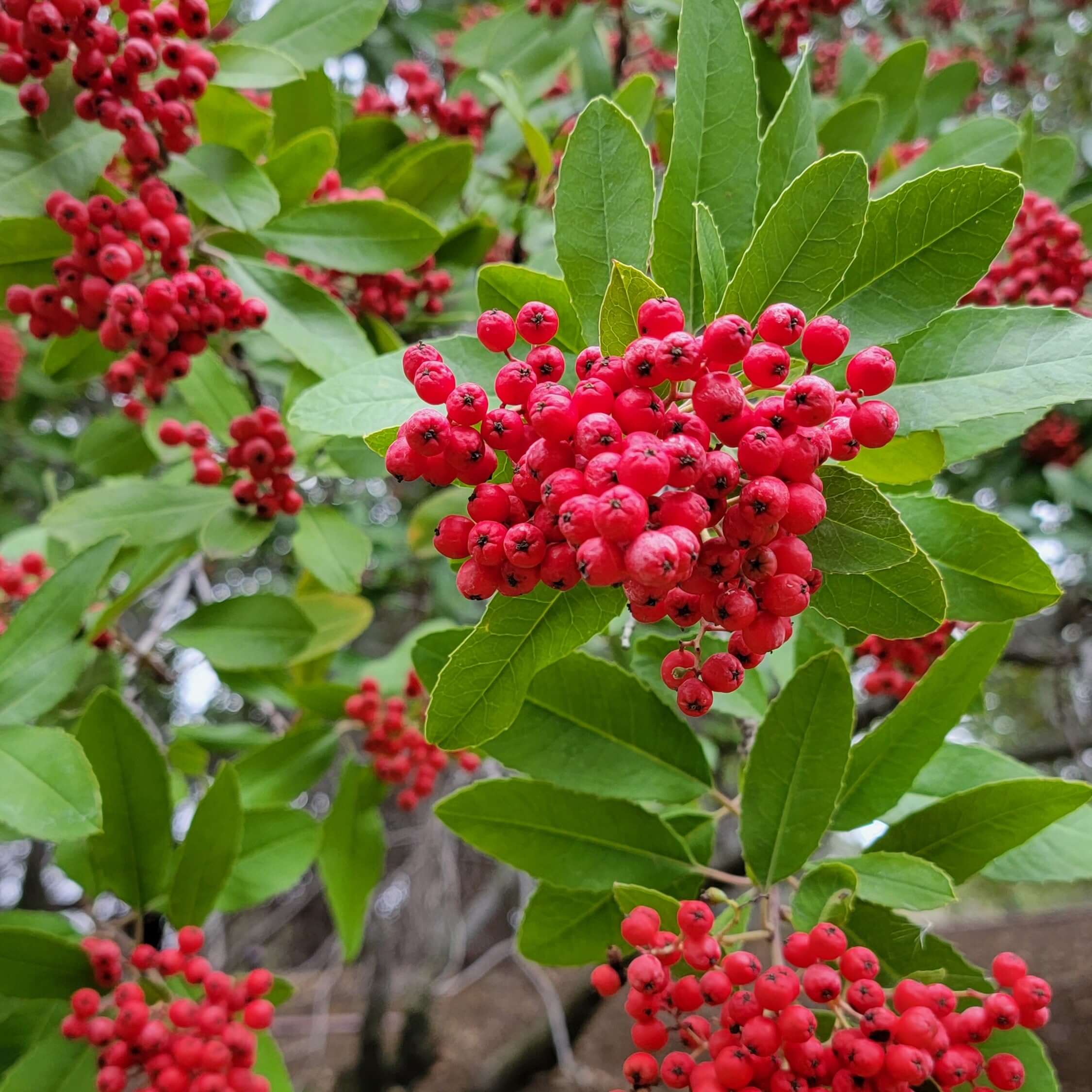


From late fall into winter, Toyon produces:
Clusters of bright red berries
Long-lasting seasonal color
A natural holiday feel
👉 These berries are a critical food source for birds.
2. Evergreen Structure Year-Round 🌿
Glossy, leathery leaves
Dense branching habit
Strong architectural presence
👉 Works as a backbone plant in both native and mixed gardens.
3. Extremely Drought-Tolerant ☀️
Once established, Toyon:
Thrives on minimal water
Handles dry summers with ease
Performs well on slopes and poor soils
👉 Ideal for low-water, climate-adapted landscapes.
🌸 Flowers: Subtle but Important


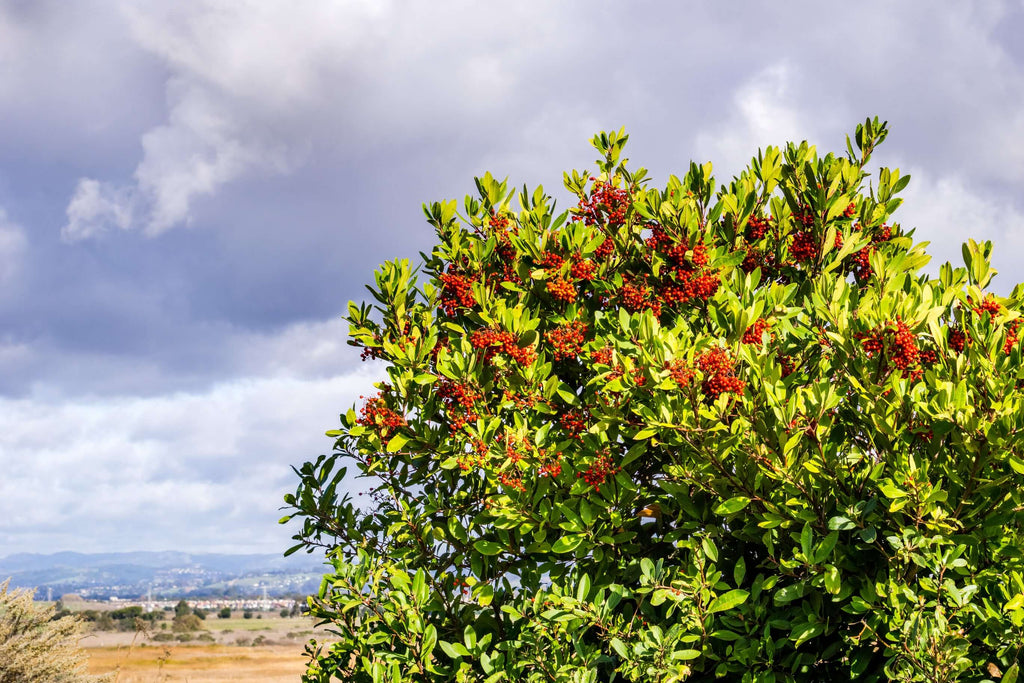
In early summer, Toyon produces:
Creamy white flower clusters
Light, airy appearance
While not flashy, they:
Attract bees and pollinators
Set the stage for winter berries
🌱 Growing Conditions
☀️ Light
Best:
Full sun → best berry production
Tolerates:
Part shade
👉 More sun = more flowers and berries.
💧 Water
Year 1: Regular watering to establish
After: Very low water
⚠️ Overwatering can:
Reduce berry production
Cause weak growth
🌱 Soil
Very adaptable:
Clay
Sandy
Rocky soils
👉 Just ensure decent drainage.
✂️ Care & Maintenance
Pruning
Minimal pruning needed
Best time: after berry season (late winter)
You can:
Shape into a tree form
Keep as a dense shrub
Maintain as a hedge
Fertilizing
Not needed
Too much fertilizer = excessive leafy growth, fewer berries
Growth Habit
Naturally upright and slightly open
Can be trained or left informal
🌿 Landscape Uses
🌳 Screening & Privacy
Dense enough for:
Informal hedges
Property borders
🌿 Small Tree Form
Can be limbed up into:
A multi-trunk small tree
Great for adding height without bulk
🌸 Wildlife Garden
Supports:
Birds (berries)
Pollinators (flowers)
👉 A key plant for habitat-friendly gardens.
⚠️ Things to Know
Berries are not for casual snacking (historically used when cooked)
Can grow large—plan space accordingly
May take a couple of years to produce heavy berries
🌿 How Fast Does It Grow?
Moderate growth rate
Faster with:
Occasional deep watering
Good sun exposure
💡 Can reach full size in 5–7 years under good conditions.
🌟 Key Takeaways
One of the most iconic California native shrubs
Provides year-round structure + winter color
Extremely drought-tolerant and low maintenance
Supports wildlife and pollinators
Works as a hedge, screen, or small tree
🌿 Final Thoughts
Toyon is more than just a plant—it’s part of California’s identity.
It anchors a garden with:
Strength
Seasonality
A deep connection to place
If you’re building a landscape that feels authentic, resilient, and alive with seasonal change, Toyon is a plant you’ll never regret adding.
Comments
Post a Comment