🌿 Sedum ‘Autumn Joy’ (Hylotelephium ‘Herbstfreude’)
🌿 Sedum ‘Autumn Joy’ (Hylotelephium ‘Herbstfreude’): Structure, Color, and a Perfect Fall Finish
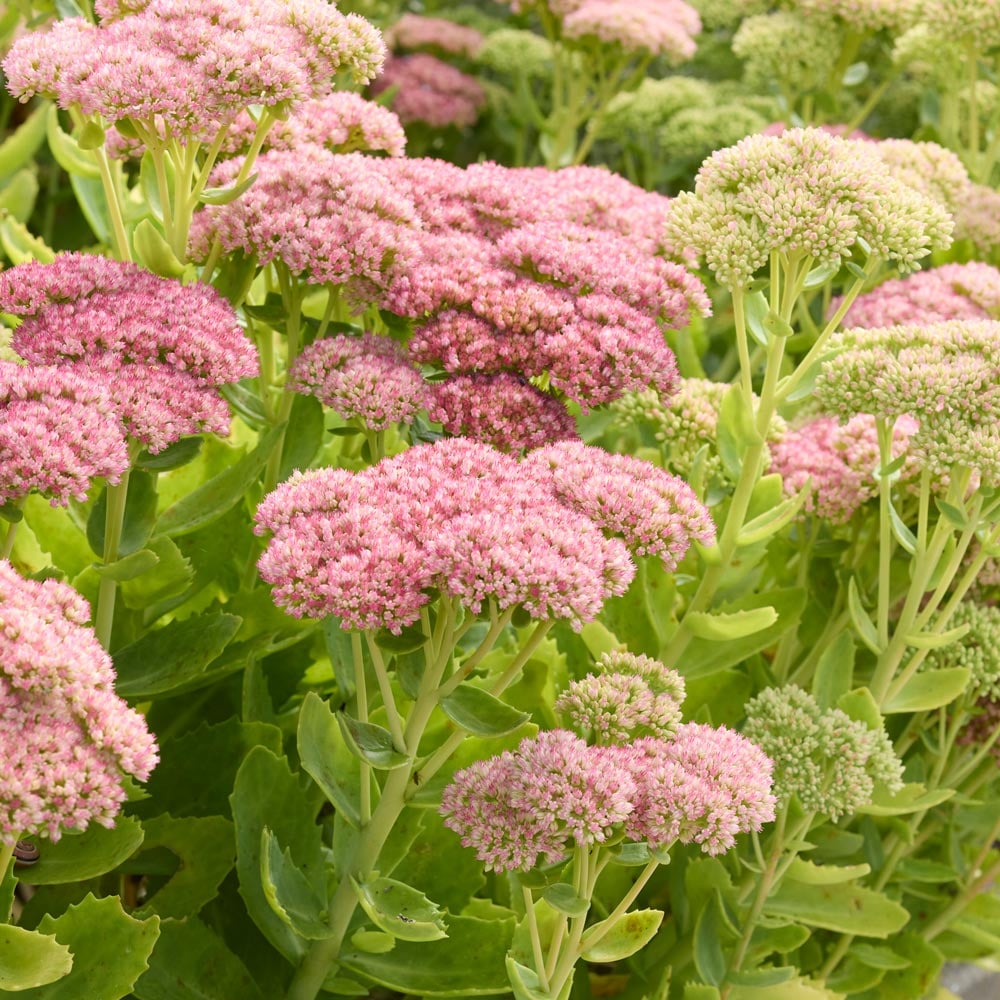

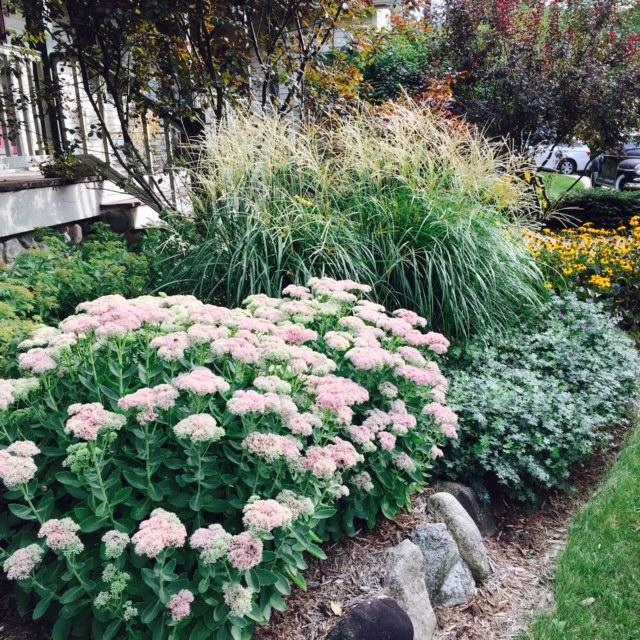

If you want a perennial that looks good from spring through winter—and actually peaks when everything else is fading— Sedum ‘Autumn Joy’ is one of the most dependable plants you can grow.
With its succulent foliage, sturdy upright form, and flower heads that evolve in color over months, it delivers structure and seasonal interest without demanding attention.
🌼 Quick Facts
Botanical name: Hylotelephium ‘Herbstfreude’ (formerly Sedum ‘Autumn Joy’)
Common name: Autumn Joy sedum, stonecrop
Plant type: Herbaceous perennial (succulent)
USDA zones: 3–9
Height: 18–24 inches
Width: 18–24 inches
Light: Full sun
Water: Low
Bloom time: Late summer → fall → winter interest
Wildlife: Bees, butterflies
🌿 Why ‘Autumn Joy’ Is So Reliable
1. Multi-Stage Color Transformation 🎨
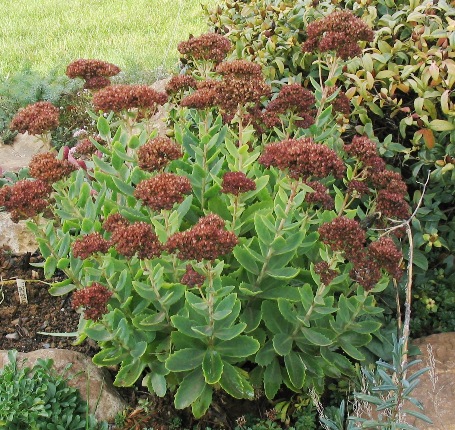
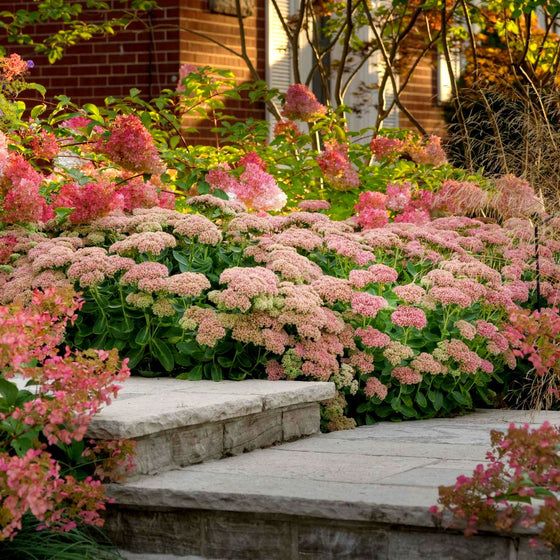
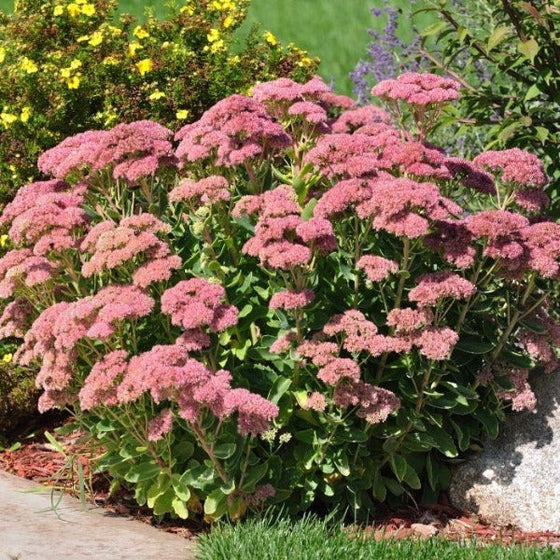
This plant doesn’t just bloom—it evolves:
Early summer: tight green buds
Late summer: soft pink blooms
Fall: deep rose to rusty red
Winter: bronze, dried seed heads
👉 One plant gives months of changing color and texture.
2. Strong, Upright Structure 🌿
Thick, succulent stems
Holds shape without staking
Forms neat, rounded clumps
👉 Adds order and stability to borders.
3. Extremely Drought-Tolerant ☀️
Stores water in its leaves
Thrives in dry, sunny conditions
👉 Ideal for low-water, low-maintenance gardens.
🌱 Growing Conditions
☀️ Light
Needs:
Full sun for best form and color
👉 Too much shade = floppy stems.
💧 Water
Establishment: Regular watering
Mature:
👉 Low water
⚠️ Overwatering can:
Weaken stems
Cause rot
🌱 Soil
Prefers:
Well-draining soil
Thrives in:
Sandy
Lean soils
👉 Avoid rich, heavy soil.
✂️ Care & Maintenance
Minimal Maintenance ✔️
No staking required
No frequent pruning
Optional: Cut Back in Spring
Remove old stems before new growth emerges
Division
Divide every few years if needed
Helps rejuvenate plant
Fertilizing
Not necessary
Too much fertility reduces performance
🌿 Growth Habit
Forms compact, upright clumps
Expands slowly over time
Non-invasive
💡 Reliable and predictable.
🌿 Landscape Uses
🌿 Mixed Borders
Provides structure among softer plants
🌸 Mass Planting
Creates a strong, unified look
🌿 Drought-Tolerant Gardens
Works beautifully in:
Gravel gardens
Dry borders
🌿 Fall Interest Planting
One of the best plants for:
Late-season color
🌿 Fresh Pairing Ideas
To complement its structure and seasonal color:
🌿 For movement contrast
Calamagrostis ‘Karl Foerster’ → upright grass
Muhlenbergia capillaris → airy pink clouds
🌸 For color contrast
Aster (Symphyotrichum) → cool purple fall tones
Helenium → warm late-season blooms
🌿 For texture layering
Yucca filamentosa → bold, spiky structure
Festuca glauca → low blue mounds
🌼 For seasonal progression
Allium → spring structure
Salvia greggii → long bloom companion
👉 These combinations create a dynamic, seasonally evolving garden with strong structure and contrast.
⚠️ Things to Know
Can flop in:
Too much shade
Overly rich soil
Best left undisturbed once established
Dried seed heads provide winter interest
🌿 How Fast Does It Grow?
Moderate growth
Establishes in:
1–2 years
💡 Improves with age and clump size.
🌟 Key Takeaways
One of the best late-season perennials
Provides multi-stage color and long-lasting interest
Thrives in:
Full sun
Low water
Ideal for:
Borders
Mass planting
Drought-tolerant designs
🌿 Final Thoughts
‘Autumn Joy’ is a plant that understands timing.
It doesn’t rush. It builds slowly—then peaks when the rest of the garden begins to fade.
It brings:
Structure
Warmth
A sense of seasonal rhythm
into the landscape.
If you want a garden that doesn’t fade at the end of summer—but instead finishes strong, this is one of the best plants you can grow.
Comments
Post a Comment