🌿 Hakonechloa macra (Japanese Forest Grass): Flow, Light, and Quiet Elegance


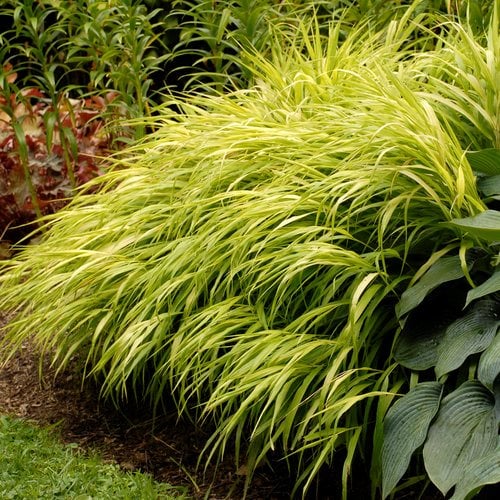
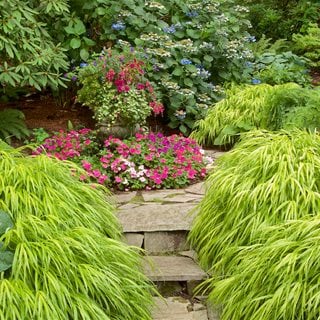
If there’s one plant that instantly softens a garden and makes it feel calm, layered, and intentional, it’s Hakonechloa macra, commonly known as Japanese forest grass.
Unlike upright ornamental grasses, Hakonechloa forms low, flowing mounds that drape like water, catching light and creating movement even in the stillest corners of the garden.
🌼 Quick Facts
Botanical name: Hakonechloa macra
Common name: Japanese forest grass
Plant type: Deciduous ornamental grass
Native to: Japan
USDA zones: 5–9
Height: 12–18 inches
Width: 18–24 inches
Light: Part shade → full shade
Water: Moderate
Best season: Spring → fall (peak summer glow)
🌿 Why Hakonechloa Is So Loved
1. That Signature “Waterfall” Form 🌊
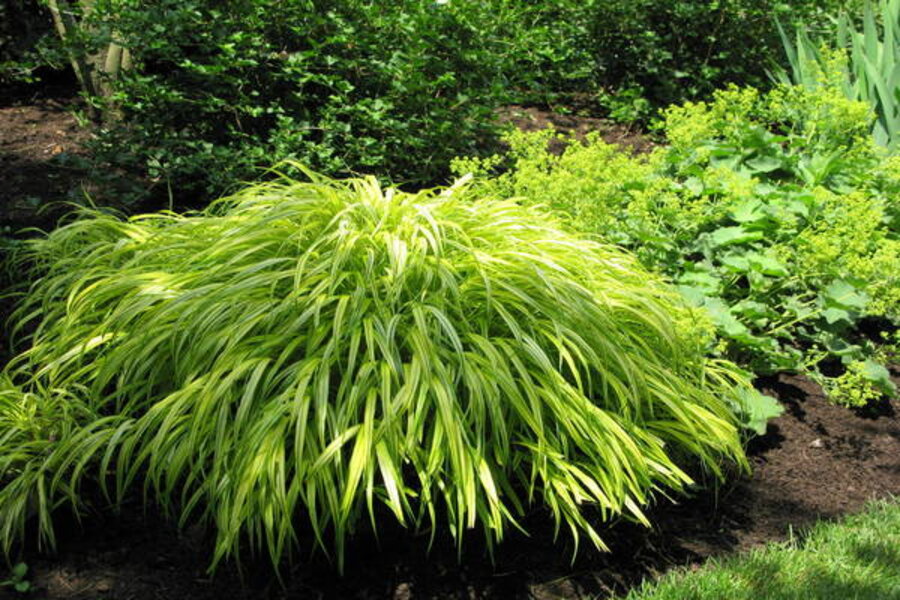


Grows in arching, cascading mounds
Leaves spill outward like:
A fountain
A soft wave
👉 It brings movement and softness without needing wind.
2. Glows in Shade ✨
Leaves catch and reflect light beautifully
Especially striking in:
Dappled shade
Woodland settings
👉 It brightens areas where many plants look dull.
3. Gentle, Refined Texture 🌿
Fine, narrow leaves
Soft, flowing appearance
👉 Perfect for balancing:
Bold foliage
Hardscape elements
🌱 Popular Varieties
🌿 ‘Aureola’
Golden-yellow with green striping
Brightens dark corners
🌿 ‘All Gold’
Solid chartreuse/gold
More sun-tolerant than others
🌿 ‘Beni-kaze’
Green in summer
Turns red/orange in fall
👉 Each variety offers a slightly different mood.
🌱 Growing Conditions
☀️ Light
Best:
Part shade to full shade
Tolerates:
Gentle morning sun
⚠️ Too much hot sun can:
Scorch leaves
Fade color
💧 Water
Needs:
Consistent moisture
Soil should stay:
Evenly moist (not dry, not soggy)
👉 Unlike drought plants, this one prefers regular watering.
🌱 Soil
Prefers:
Rich, well-draining soil
Benefits from:
Compost
Mulch
👉 Keeps roots cool and happy.
✂️ Care & Maintenance
Pruning
Cut back in late winter before new growth
Remove old foliage
Fertilizing
Light compost in spring
Avoid heavy feeding
Growth Habit
Slow to moderate growth
Expands gradually into:
Dense, elegant clumps
💡 Not aggressive—easy to manage.
🌿 Landscape Uses
🌿 Edging & Borders
Softens:
Pathways
Garden edges
🌸 Under Trees
Perfect for:
Woodland plantings
Shaded beds
🌿 Containers
Cascades beautifully over:
Pots
Raised planters
🌿 Mass Planting
Creates a flowing, unified ground layer
🌿 Plant Pairing Ideas
To complement Hakonechloa’s soft, flowing texture:
🌿 For bold contrast
Fatsia japonica → large, glossy leaves
Rodgersia → dramatic, textured foliage
🌸 For delicate layering
Epimedium → airy spring flowers
Tiarella → foam-like blooms
🌿 For color interplay
Acer palmatum (green or red forms) → overhead structure
Hosta (blue varieties) → cool-toned contrast
🌼 For seasonal interest
Anemone × hybrida → late-season blooms
Tricyrtis (toad lily) → fall surprise flowers
👉 These combinations create a lush, layered shade garden with depth and movement.
⚠️ Common Problems
| Issue | Cause | Fix |
|---|---|---|
| Browning tips | Too dry | Increase watering |
| Scorched leaves | Too much sun | Move to shade |
| Slow growth | Poor soil | Add compost |
🌿 How Fast Does It Grow?
Slow to moderate
Reaches full size in:
2–3 years
💡 Worth the patience—it improves with age.
🌟 Key Takeaways
One of the best ornamental grasses for shade
Adds movement, softness, and light reflection
Thrives in:
Part shade
Moist, well-drained soil
Ideal for:
Edging
Woodland gardens
Containers
🌿 Final Thoughts
Hakonechloa isn’t loud—but it’s transformative.
It brings:
Flow
Calm
A sense of cohesion
into a garden in a way few plants can.
If your space feels:
Too rigid
Too static
A little disconnected
This is the plant that gently ties everything together—like a quiet thread running through the design.
Comments
Post a Comment