🌸 Gaura (Oenothera lindheimeri)
🌸 Gaura (Oenothera lindheimeri): Airy Movement and Effortless Bloom All Season


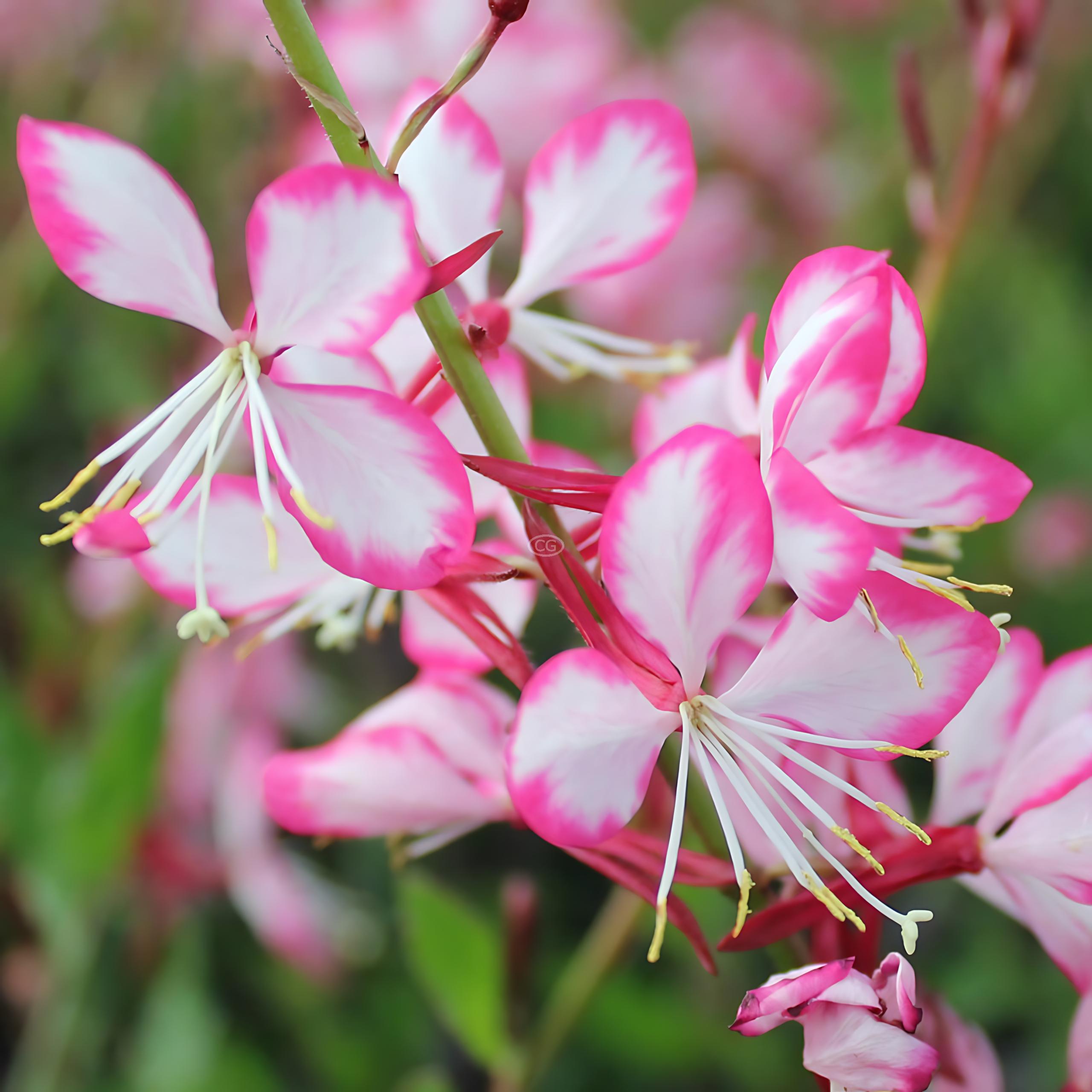
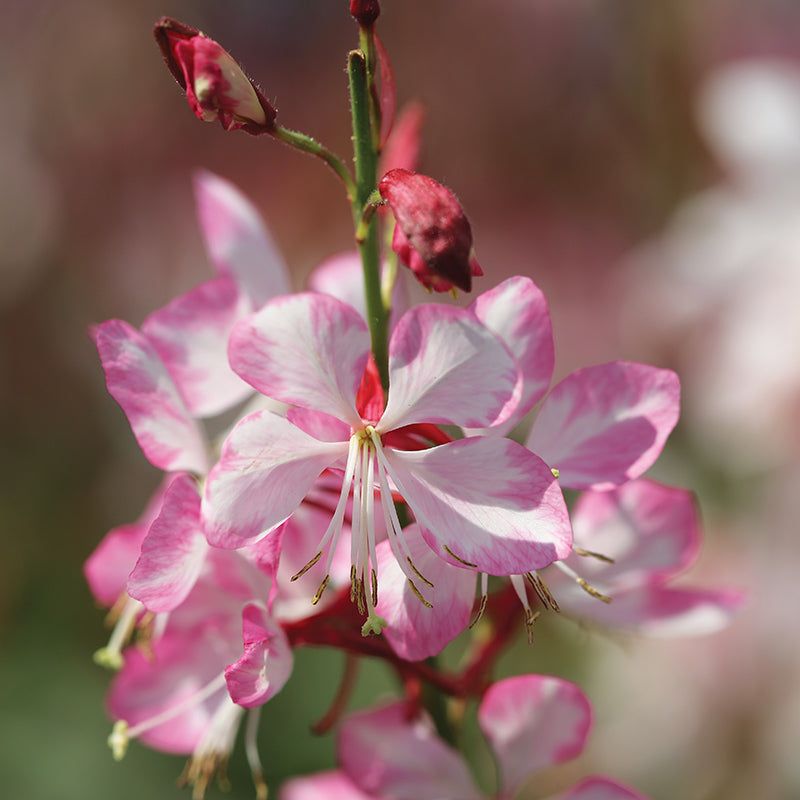
If you want a plant that brings lightness, motion, and months of bloom without heaviness, Gaura—often called whirling butterflies—is one of the most graceful perennials you can grow.
With its delicate flowers dancing on tall, wiry stems, Gaura creates a sense of constant movement, even in still air.
🌼 Quick Facts
Botanical name: Oenothera lindheimeri (formerly Gaura lindheimeri)
Common name: Gaura, whirling butterflies
Plant type: Herbaceous perennial
Native to: North America
USDA zones: 5–9
Height: 2–4 ft
Width: 2–3 ft
Light: Full sun
Water: Low
Bloom time: Late spring → fall
Wildlife: Bees, pollinators
🌿 Why Gaura Is So Effective
1. Airy, Floating Flowers 🦋

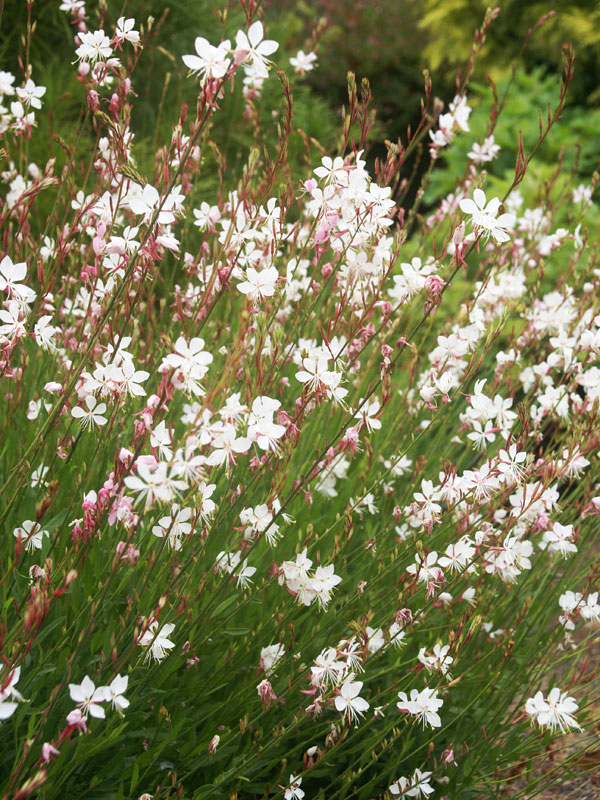
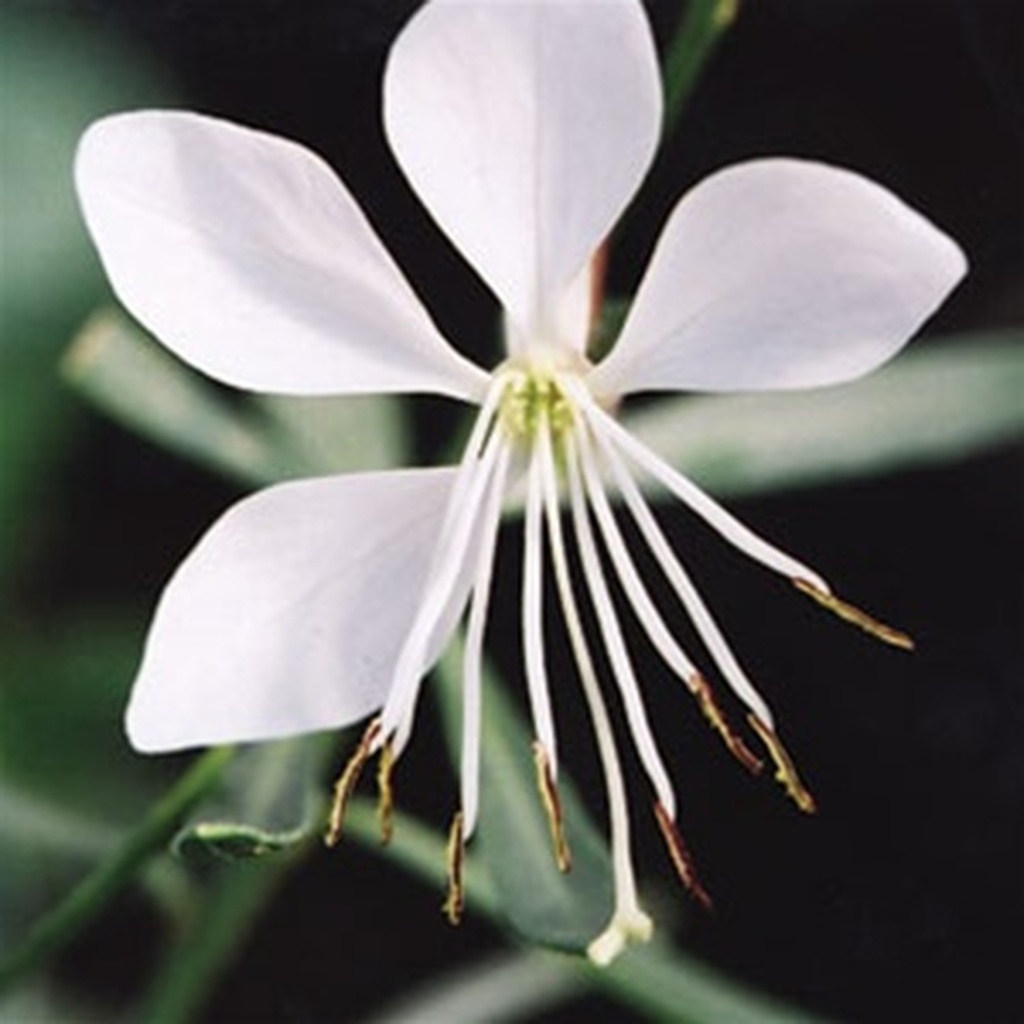
Small, four-petaled blooms
Appear to “hover” above the plant
Often compared to:
Butterflies
Floating petals
👉 Adds movement and softness without density.
2. Long Bloom Season 🌸
Flowers continuously from:
Late spring through fall
Produces new blooms constantly
👉 One of the best plants for extended seasonal color.
3. Drought-Tolerant and Tough ☀️
Thrives in:
Heat
Dry soil
Needs minimal care once established
👉 Perfect for low-water gardens.
4. Blends Seamlessly 🌿
Doesn’t dominate
Weaves between other plants
👉 Ideal for:
Naturalistic planting
Softening structured designs
🌱 Popular Varieties
‘Whirling Butterflies’ → classic white
‘Siskiyou Pink’ → soft pink tones
‘Belleza Dark Pink’ → compact, vibrant
‘Sparkle White’ → shorter, denser form
🌱 Growing Conditions
☀️ Light
Needs:
Full sun for best performance
👉 Less sun = fewer blooms and floppy growth.
💧 Water
Establishment: Regular watering
Mature:
👉 Low water
👉 Very drought-tolerant once established.
🌱 Soil
Prefers:
Well-draining soil
Thrives in:
Lean, sandy soil
👉 Avoid heavy, wet soil.
✂️ Care & Maintenance
Light Shearing (Optional)
Trim lightly mid-season to:
Refresh shape
Encourage more blooms
Pruning
Cut back in late winter or early spring
Fertilizing
Not necessary
Too much fertility reduces flowering
🌿 Growth Habit
Upright but airy
Loosely branching stems
Slightly spreading
💡 Creates a soft, transparent layer in planting.
🌿 Landscape Uses
🌿 Mixed Borders
Fills gaps without crowding
🌸 Naturalistic & Meadow Planting
Perfect for:
Informal designs
Flowing plantings
🌿 Drought-Tolerant Gardens
Works beautifully in:
Dry landscapes
🌿 Containers
Adds movement to pots
🌿 Fresh Pairing Ideas
To complement Gaura’s light, airy quality:
🌿 For strong structure contrast
Echinacea → bold, upright blooms
Sedum ‘Autumn Joy’ → solid, architectural form
🌸 For color interplay
Salvia ‘Amistad’ → deep purple contrast
Coreopsis → bright yellow accents
🌿 For texture layering
Muhlenbergia capillaris → soft pink grass clouds
Stipa tenuissima → fine, flowing grass
🌼 For seasonal continuity
Verbena bonariensis → airy vertical blooms
Rudbeckia → late-season color
👉 These combinations create a layered, movement-rich planting with long seasonal interest.
⚠️ Things to Know
Can look sparse if planted alone
Benefits from grouping
May self-seed lightly
🌿 How Fast Does It Grow?
Moderate to fast
Establishes in:
one season
💡 Quickly fills in and becomes effective.
🌟 Key Takeaways
One of the best airy, long-blooming perennials
Provides:
Movement
Lightness
Continuous flowers
Thrives in:
Full sun
Low water
Ideal for:
Borders
Naturalistic planting
Drought-tolerant gardens
🌿 Final Thoughts
Gaura is a plant that changes how a garden feels.
It doesn’t anchor—it lifts.
It brings:
Motion
Softness
A sense of ease
into a planting.
If your garden ever feels:
Too heavy
Too structured
Lacking movement
Gaura is often the element that makes everything feel lighter—and more alive.
Comments
Post a Comment