🌿 Garrya elliptica (Coast Silk Tassel): A California Native with Winter Drama

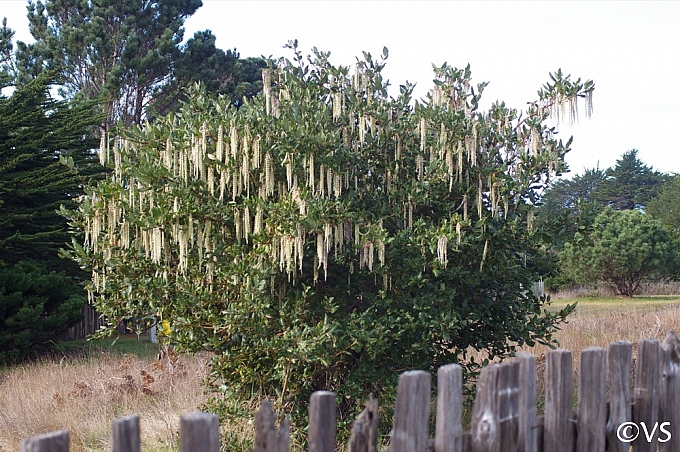


If your garden ever feels a little quiet in winter, Garrya elliptica—commonly called coast silk tassel—is the plant that changes that story.
This California native shrub delivers something rare: long, cascading winter catkins that sway in the breeze like living ornaments, paired with tough, evergreen structure that anchors a garden year-round.
🌼 Quick Facts
Botanical name: Garrya elliptica
Common name: Coast silk tassel
Plant type: Evergreen shrub
Native to: Coastal California & Oregon
USDA zones: 8–10
Height: 8–15 ft (can reach 20 ft)
Width: 6–10 ft
Light: Full sun → part shade
Water: Low once established
Bloom time: Winter (Dec–Feb)
Wildlife: Supports pollinators
🌿 Why Garrya elliptica Stands Out
1. Winter Interest Like No Other ❄️
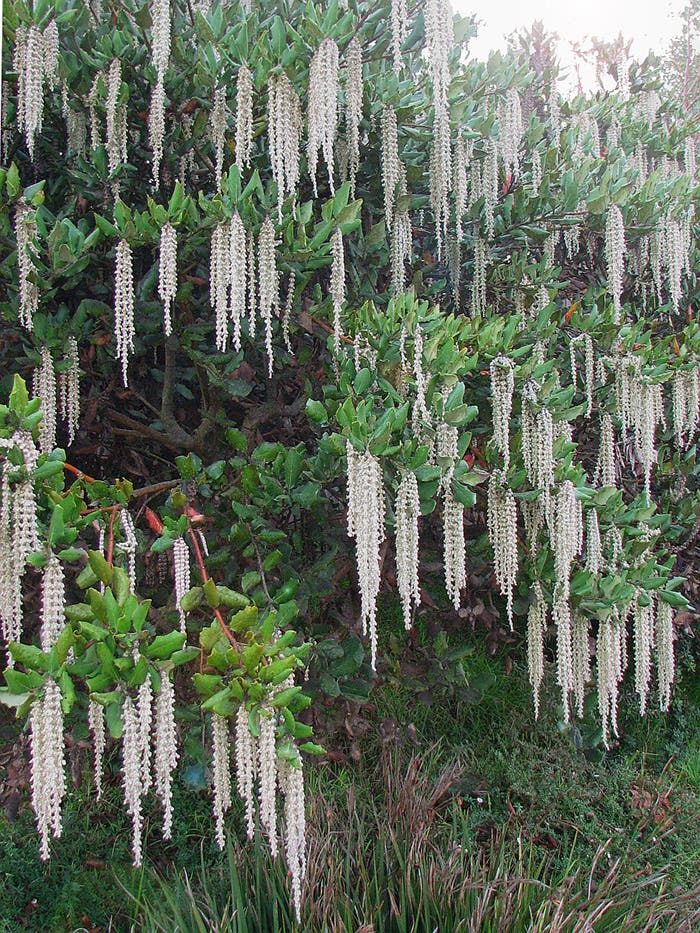


When most plants are dormant, Garrya produces:
Silvery-gray tassels (catkins) up to 12 inches long
Movement and texture in winter light
A soft, almost ethereal look
👉 Cultivar tip:
‘James Roof’ = famous for extra-long tassels
2. Strong Evergreen Backbone 🌿
Dense, leathery leaves
Deep green with lighter undersides
Holds structure all year
👉 Works as a visual anchor in loose, natural plantings.
3. Built for California Conditions ☀️
Drought-tolerant once established
Thrives in poor to average soils
Handles coastal wind and dry summers
👉 A true set-it-and-forget-it shrub after year one.
🌱 Growing Conditions
☀️ Light
Best:
Full sun near coast
Part shade inland
👉 In warmer inland spots: give it afternoon protection
💧 Water
Establishment: Regular watering first year
Mature: Low water
⚠️ Overwatering can cause:
Root issues
Leggy growth
🌱 Soil
Needs:
Excellent drainage
Tolerates:
Sandy soil
Lean soil
👉 Avoid heavy, soggy clay unless amended.
🌿 Male vs Female Plants (Important!)
Garrya elliptica is dioecious:
Male and female flowers grow on separate plants
What this means:
Male plants → long, showy tassels (what most people want)
Female plants → shorter tassels + berries
👉 If buying for ornamental impact, choose:
Male cultivar like ‘James Roof’
✂️ Care & Maintenance
Pruning
Minimal pruning needed
Best time: after flowering (late winter)
You can:
Shape lightly
Control size
Remove crossing branches
Fertilizing
Not necessary
Too much fertilizer = weak growth
Growth Habit
Naturally upright and slightly open
Can be:
Left natural for a wild look
Trimmed into a hedge or screen
🌿 Landscape Uses
🌳 Privacy Screen or Hedge
Dense enough for screening
More natural alternative to boxwood or ficus
🌿 Backdrop Plant
Provides contrast for:
Softer perennials
Flowering plants
🌸 Winter Focal Point
Plant where tassels can be appreciated:
Near entryways
Along paths
Against a darker background
🌿 Plant Pairing Ideas
To create a layered, California-native look:
Salvia spathacea → fragrant groundcover
Native Heuchera → low mounding texture
Iris douglasiana → seasonal color
Ferns → soften the base
👉 This combination creates a lush understory with a strong evergreen backbone.
⚠️ Common Issues
| Issue | Cause | Fix |
|---|---|---|
| Sparse growth | Too much shade | Move to brighter spot |
| Root problems | Poor drainage | Improve soil |
| No tassels | Female plant or too young | Verify cultivar |
🌟 Key Takeaways
One of the best winter-interest shrubs for California
Extremely low water and low maintenance
Provides year-round structure + seasonal drama
Ideal for naturalistic, native, or Mediterranean gardens
🌿 Final Thoughts
Garrya elliptica is the kind of plant that quietly holds a garden together—and then surprises you in winter with something unforgettable.
It’s not about bright flowers or fast growth.
It’s about structure, movement, and seasonality.
If your garden needs:
A strong evergreen presence
A native, climate-adapted backbone
And a little winter magic
This is a plant worth building around.
Comments
Post a Comment